



MSN Home   |   My MSN   |   Hotmail   |   Search   |   Shopping   |   Money   |   People & Chat 
MSN.comClick Here!
MSNBC.com
Click Here!
Home page


Pain pills may help treat Alzheimer’s
Aspirin-like drugs dissolve brain lesions, researchers say

Reuters
March 13 — Common pain pills such as ibuprofen and naproxen may actually dissolve the brain lesions that clog the brains of Alzheimer’s patient, U.S. researchers reported Wednesday.


Interactive Take our interactive quizzes
Internet Sites Sign up for our free health e-newsletter
 
Advertising on MSNBC

Ameritrade
 
TD Waterhouse
 
Click Here!
 
.
 
Newsweek MSNBC Live Vote


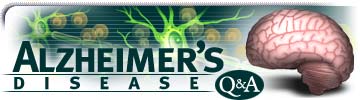
Health Library: Neurological health

       THE FINDINGS may help explain studies that suggest people who frequently take the aspirin-like pills seem to have a lower risk of Alzheimer’s, which affects an estimated 4 million Americans.
       Writing in the journal Neuroscience, the team at the University of California Los Angeles said they made the discovery using a new chemical marker called FDDNP.
       It attaches to the amyloid plaques that mark Alzheimer’s, allowing scientists to watch their progression. These plaques eventually kill brain cells, leading to the progressive loss of memory and brain function that debilitates and kills Alzheimer’s patients.
       Using brain tissue in laboratory dishes, the team showed that FDDNP goes straight for the damaging protein plaques. When they added ibuprofen and other non-steroidal anti-inflammatory drugs, the plaques seemed to break up.

Alzheimer's is a degenerative brain disease that usually begins gradually, causing a person to forget recent events or familiar tasks. How rapidly it advances varies from person to person, but the disease eventually leads to confusion, personality and behavior changes and impaired judgment. Communication becomes more difficult as the disease progresses, leaving those affected struggling to find words, finish thoughts or follow directions. Eventually, most people with Alzheimer’s disease become unable to care for themselves.
One in 10 people over 65 and nearly half of those over 85 suffer from Alzheimer’s disease. Today, 4 million Americans have the condition. That number could jump to 14 million by the year 2050 unless prevention methods are developed.
Scientists still are not certain of the disease's cause. Advancing age and family history are risk factors. Researchers are exploring the role of genetics in the disease, but most agree it's caused by a variety of factors.
There is no single, comprehensive diagnostic test for Alzheimer’s disease. Instead, doctors rule out other conditions through a process of elimination. They usually conduct physical, psychological and neurological exams and take a thorough medical history. Diagnosis is about 90 percent accurate, but the only way to confirm it is through autopsy.
There is no medical treatment currently available to cure or stop the progression of Alzheimer's disease. There are currently four FDA-approved Alzheimer's drugs -- Cognex, Aricept, Exelon and Reminyl -- that may temporarily relieve some symptoms of the disease. Several other drugs are in development.
Common symptoms of Alzheimer's disease include:
  • Memory loss that affects job skills
  • Difficulty performing familiar tasks
  • Problems with language
  • Disorientation to time and place
  • Poor or decreased judgment
  • Problems with abstract thinking
  • Placing items in inappropriate places
  • Rapid changes in mood or behavior
  • Dramatic changes in personality
  • Loss of initiative

Source: Alzheimer's Association
Printable version

       
       Dr. Jorge Barrio, a professor of molecular and medical pharmacology who led the study, said the finding offers a way to diagnose Alzheimer’s early, before too much damage has been done, and perhaps to treat the disease.
AdvertisementNewsweek Subscription

Add local news and weather to the MSNBC home page.


       There is currently no cure for Alzheimer’s and treatments only improve symptoms for a short time.
       “This would provide hope to patients and families by modifying outcomes,” Barrio said in a statement.
       “This new technology will likely help us monitor new vaccines and drugs designed to prevent and treat the brain damage caused by Alzheimer’s disease,” added Dr. Gary Small, a professor of psychiatry who worked on the study.
       
       © 2003 Reuters Limited. All rights reserved. Republication or redistribution of Reuters content is expressly prohibited without the prior written consent of Reuters.


MSNBC News Pain pills may help treat Alzheimer's
MSNBC News No link between vaccines, SIDS
MSNBC News Senate rejects care for pregnant poor
MSNBC News FDA to crackdown on cheaper drugs
MSNBC News 'Today': Coping with a cancer diagnosis
MSNBC News MSNBC Cover Page


Health News MSNBC's Health Library
Health News Return to Health front page
Internet Sites MSN Health
 
     
InfocenterWrite UsNewstoolsHelpSearchMSNBC News
  MSNBC READER'S TOP 10  
 

Would you recommend this story to other readers?
not at all   1    -   2  -   3  -   4  -   5  -   6  -   7   highly


  Download MSN Explorer!NBC.com
  MSNBC is optimized for
Microsoft Internet Explorer
Windows Media Player
 
MSNBC Terms,
  Conditions and Privacy © 2003
   
 
Cover | News | Business | Sports | Local News | Health | Technology & Science | Living | Travel
TV News | Opinions | Weather | Comics
InfoCenter | Newsletters | Search | Help | News Tools | Jobs | Write Us | Terms & Conditions | Privacy
   
  MSN - More Useful Everyday
  MSN Home   |   My MSN   |   Hotmail   |   Search   |   Shopping   |   Money   |   People & Chat
  ©2003 Microsoft Corporation. All rights reserved. Terms of Use  Advertise  Truste Approved Privacy Statement  GetNetWise
Advertisement
Next Generation Panasonic
$299.95
SharperImage


Sponsored
Click Here!Allergies Front PageAnatomy of a ReactionTips for beating allergiesInteractive Checkup